The Pleasure Lab
Four weeks of small experiments in interest and pleasure —
to reconnect with what actually lights you up.
Heads up: the Lab itself currently runs in Russian. Want an English cohort? Tell me here — enough hands raised, and it happens.
“I kept noticing that the most alive, most beautiful things in my life never came out of strain. They came from following interest and pleasure. I once recorded a podcast purely for the joy of it — whoosh, it became a book. In the Lab, we treat pleasure and interest as states that generate energy, attention, and momentum.”
Does any of this sound like you?
These are real phrases from past participants, word for word. Tap the one that hits closest — underneath is what usually stands behind it.
Everyone's snag is different — and that's where we start: I talk with every participant one-on-one before the group begins.
The signal of interest is quiet. We learn to catch it — and turn it up.
There's a well-studied idea in psychology: low- and mid-intensity positive emotions — interest, joy, cozy contentment — broaden thinking and behavior. You want to explore, play, try things. Over time, that state builds up resources: energy, relationships, resilience. It's called the broaden-and-build effect (Barbara Fredrickson).
This cycle breaks in a different place for everyone — which is why the Lab has no one-size “step 1-2-3” program. There's a shared frame, a menu of experiments, and tuning for wherever your snag is.
October – November 2026
October
| mo | tu | we | th | fr | sa | su |
|---|---|---|---|---|---|---|
| 1 | 2 | 3 | 4 | |||
| 5 | 6 | 7 | 8 | 9 | 10 | 11 |
| 12 | 13 | 14 | 15 | 16 | 17 | 18 |
| 19 | 20 | 21 | 22 | 23 | 24 | 25 |
| 26 | 27 | 28 | 29 | 30 | 31 |
November
| mo | tu | we | th | fr | sa | su |
|---|---|---|---|---|---|---|
| 1 | ||||||
| 2 | 3 | 4 | 5 | 6 | 7 | 8 |
| 9 | 10 | 11 | 12 | 13 | 14 | 15 |
| 16 | 17 | 18 | 19 | 20 | 21 | 22 |
Four sessions — four moves of an investigation
Opening the investigation
We adopt a bold hypothesis: pleasure matters. You map your own shades of pleasure, spot the blank areas — and pick your first experiment.
What blocks interest
We figure out what exactly is muting your “want” — and you meet your inner controller in person. Spoiler: it's not the enemy, and it will negotiate.
Catching the signal
You learn to tell your own “want” from a borrowed one — and to turn a vague “I want a better life” into something precise and testable. Precision works small miracles here.
A way to keep going
We assemble it all into your personal way of sustaining interest — and answer the big question: what do I have now that I didn't have four weeks ago?
Between sessions — ordinary life as the laboratory
A call with me
15–20 minutes one-on-one: we meet, look at where your snag is, and I tune the program to who's in the room.
One experiment
Pick from the menu, adapt it to yourself. An experiment ≠ a commitment and ≠ a success — it's a way to test a hypothesis about you.
A noticing journal
Two or three moments a day: notice the pleasure, name its shade. A couple of minutes — not a second job.
A partner and a group
A buddy for weekly check-ins and a small group where everyone adds their own range to the shared pot.
Agreements
Other people's stories stay in the room. Speak only for yourself. Be fully present. And allow yourself any outcome.
Buffet-style
No “correct” insights, no mandatory breakthroughs, no required level of openness.
Just enough science — and no more
What participants say
Translated from Russian — the Lab runs in Russian for now.
The Lab landed exactly at the moment I was ready to investigate my own interest: what do I actually want? Four weeks in, I have far more understanding of what's going on with me and where to move next.

I didn't have the confidence that I was, on the whole, decent at pleasure. Now I do. Watching the group was like watching a rainbow after rain — everyone with their own color, their own shade of pleasure.
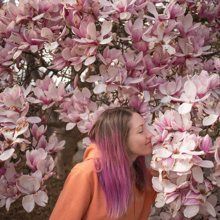
I realized pleasures are everywhere around us. It doesn't have to be something big you plan twice a year. You just have to spot them and use them in everyday life.

The most valuable part was understanding that pleasure and interest aren't things that just “happen on their own.” After the Lab, I actually think: of course pleasure should be planned. It's not a luxury — it's a real part of life.
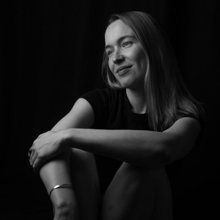
Over these four weeks I started noticing pleasure and interest in daily life much more. Once you pay attention to that, you start feeling more — and seeing which decisions lead there. It became a practice of attention.

Something like a restless itch switched on inside — I want to keep experimenting and looking for new things. I wait less for the perfect result and observe myself more: what works, what doesn't — and keep going anyway.
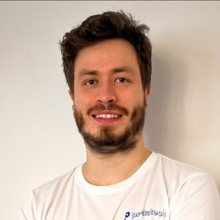
There's now space to notice where I'm acting from: “should” or my own desire? When pleasure slowly disappears, interest starts fading too. And the group was wonderful — authentic, open, observant people.

I used to think pleasure was something big, like a barrel — and the teaspoon-sized kind didn't count. Turns out it can be spread across the whole day, in small moments I simply wasn't registering before.
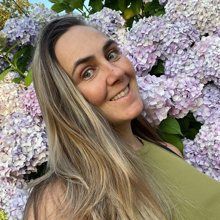
I knew pleasure existed, that it happened occasionally. What I didn't know is that you can consciously move toward it. Now that pull is there. And the 5% idea will stay with me — sometimes a very small step is enough.

Pleasure turned out to be not just a pretty idea but something structured: theory, exercises, lists of experiments — all of it stays with you, something to come back to. And it mattered so much to feel that I'm not alone on this path.

The most valuable thing was the people. Live sessions, conversations in breakout rooms — real human capital. I loved exploring myself with a group like this around.
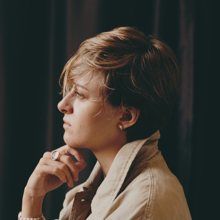
Several times in class I caught myself thinking: I already have this. And this. And this too. It's like getting permission to use it. To simply be happy. Your palette of sensations gets richer.
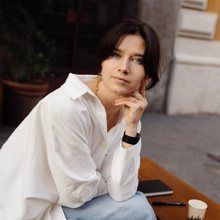
It felt like we set off on a treasure hunt, traveled a long way — and came back to ourselves. Everything was nearby all along; the skill of noticing it just appeared. A separate discovery: meeting my “cringe” side — and finding out that showing it isn't scary. It's actually fun. Like a game.

I used to think pleasure required something massive — a parachute jump, a calendar packed with massages. The main insight: a 5% change is already good. Change something consciously and the pleasure doubles.
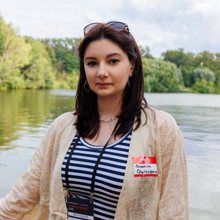
Is this your story — or not quite?
The Lab is for you if
- the goals are there, but the pleasure is thin
- lots of “should,” not much “want”
- the spark's gone out — no appetite for things
- plenty of things seem interesting, but never for long
- old interests have left, new ones haven't shown up
- everything's “fine, overall” — and something's missing
Maybe wait if
- Nothing has resonated in a long time, at all — that's a conversation for a therapist first.
- You want ready-made answers — this is research mode: hypotheses, experiments, and your own data.
- You're in an acute crisis that takes all your attention — the Lab needs at least a small free corner of you. Join the waitlist and I'll ping you about the next group.
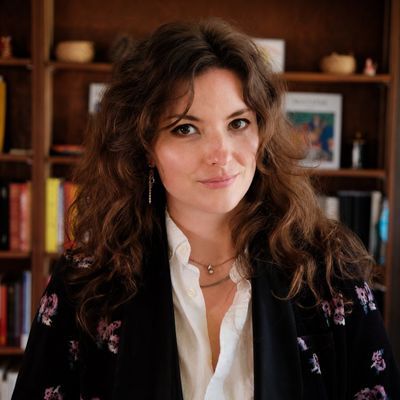
Sveta Shedina
Hi! I'm a psychologist and the author of a book on authentic communication. I work with self-contact, interest, and inner dynamics. Before psychology I spent years in UX research — I know how to turn careful observation of people into formats that work.
Training: California Institute of Integral Studies (Integral Counseling Psychology), IFS Institute (Internal Family Systems), Moscow State Pedagogical University (Psychology).
The Pleasure Lab is my original format, refined across previous cohorts and tuned to each group. My Telegram channel (in Russian).
Join the October–November group
Reminder: this cohort runs in Russian. English cohort — raise your hand here.
The Lab
- 4 sessions, 1.5 hours each
- a one-on-one call with me before we start
- experiment menu, journal, buddy
- group chat for the duration of the Lab
The Lab + personal tuning
- everything in the group tier
- + a private session with me mid-Lab (60 min): tailoring the experiments to you
- + a session after the finale (60 min): assembling your personal system and mapping what's next
Payment goes through the bot. Questions? Message Sveta's bot.
Can't make it this time? Join the waitlist — I'll write when the next group opens.
Common questions
Is there an English version of the Lab?
Not yet — this cohort runs in Russian. An English cohort is on my roadmap, and it will happen faster with visible demand: leave your name here and I'll write to you first when it opens.
What if I genuinely don't know what I want?
That's normal. It's usually exactly where the investigation starts — and honestly, it's what most people arrive with.
What outcome should I expect?
Everyone's is different — you can see it in the reviews above: for some it's permission, for some it's energy and direction, for some a filter for decisions. Yours depends on where your snag is — and that's where we start on our call before the group begins.
Is this therapy?
No. It's a structured group investigation grounded in psychological research. We don't process trauma or diagnose anything. If something comes up that calls for therapy, I'll help you find your bearings.
How much time does it take beyond the sessions?
A 1.5-hour session on Tuesdays + one small experiment a week + a couple of minutes a day for the journal. The experiments are built into your ordinary life — they don't require a separate one. Homework is buffet-style.
Can I pay in rubles, dollars, or crypto?
Yes, of course. Message Sveta's bot and we'll find a convenient way.
What if the format turns out not to be for me?
If you feel mid-way that it isn't a fit, we'll talk it through and find a fair solution — including a refund.